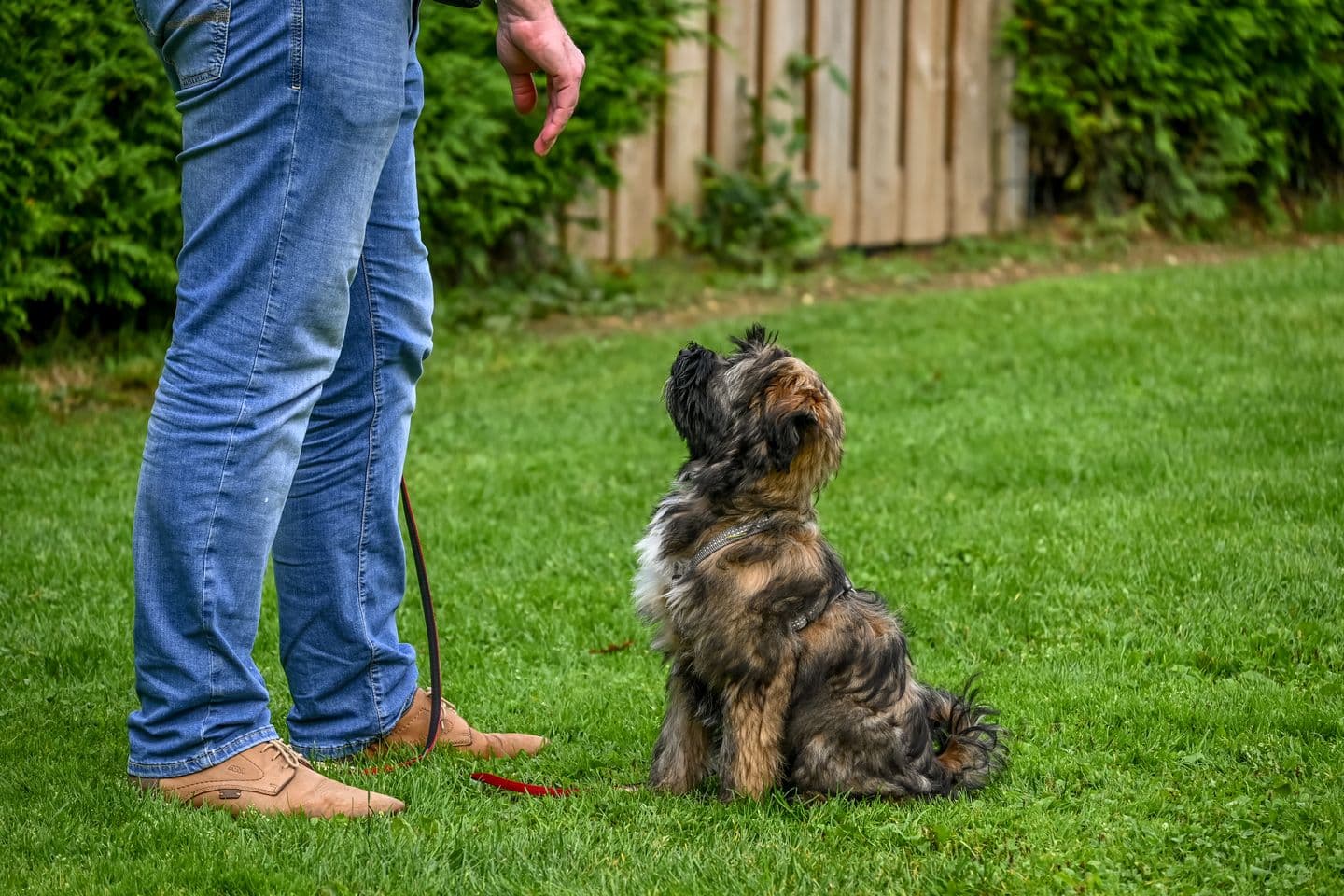
"Wait" is a softer, more practical cousin of "stay." It asks a dog to pause briefly rather than hold a fixed position for a long time, and it is one of the most genuinely useful commands for daily saf
"Wait" is a softer, more practical cousin of "stay." It asks a dog to pause briefly rather than hold a fixed position for a long time, and it is one of the most genuinely useful commands for daily safety, particularly at gates and doors that open straight onto Indian streets with unpredictable traffic and free roaming animals.
How wait differs from stay
Stay generally means hold this exact position until I release you, often for a longer duration. Wait means pause here for a moment, usually just before something happens, such as a door opening or a bowl being placed down. Because it is a shorter, more casual pause, most dogs pick it up faster than a formal stay.
Starting at the door
Put your dog on a leash and approach a door. As you reach for the handle, say "wait" and open the door only a crack. If your dog stays put, praise and open it further. If they push forward, close the door again without any scolding and try once more. Over several sessions, your dog learns that pushing forward closes the door while waiting opens it fully, which is a far stronger lesson than any verbal correction.
Building it into daily routines
Ask for a wait before opening the main gate or building entrance, especially important where the gate opens onto a road with two-wheeler traffic.
Ask for a wait before your dog exits the car, so they do not jump out into a busy parking area or road.
Ask for a wait before placing the food bowl down, releasing them with an "okay" once the bowl is settled.
Keeping it reliable
Practise wait in low distraction settings before relying on it in high stakes ones like a busy street. Always release your dog clearly with a consistent word such as "okay" or "free," so they understand exactly when the wait has ended rather than guessing.
Beyond the familiar Great Dane and Saint Bernard, a number of large, calm breeds carry the same gentle-giant temperament without quite the same name recognition. Most remain genuinely rare in India, b
A once-bouncy dog that suddenly seems flat, uninterested in walks, and withdrawn from the family is unsettling to watch, and the question that naturally follows is whether dogs can actually feel somet
A healthy dog isn't just a contented one; they're more playful, more energetic and more emotionally settled. As their owner, you're the biggest factor in how well your dog thrives, day in and day out.