The Easiest Way to Teach Your Dog to Sit on Command
Sit is usually the first command any dog learns, and for good reason. It has almost no room for confusion, most dogs discover it within a handful of repetitions, and once it is solid it becomes the de
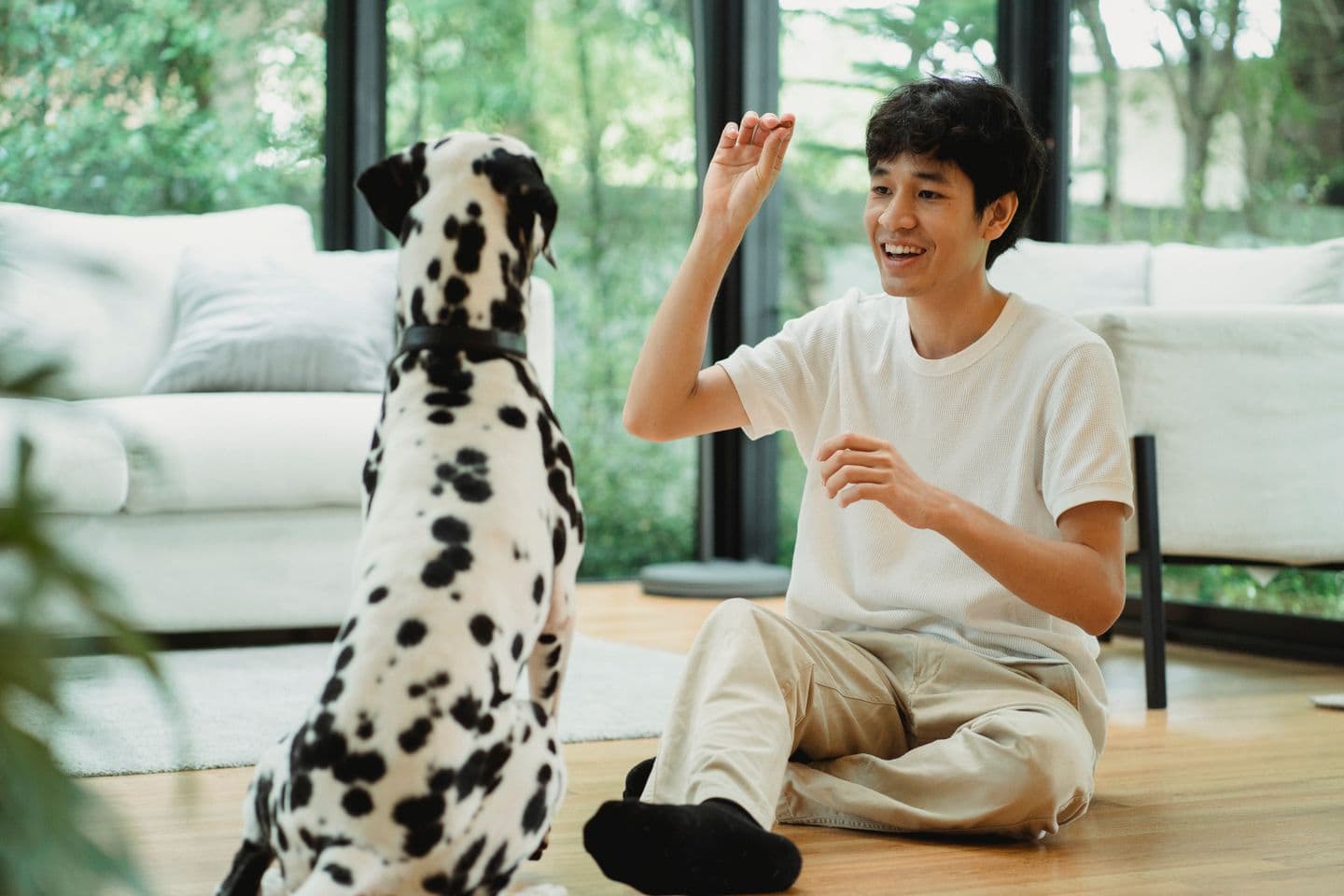
Sit is usually the first command any dog learns, and for good reason. It has almost no room for confusion, most dogs discover it within a handful of repetitions, and once it is solid it becomes the default polite behaviour you can ask for before almost anything your dog wants.
The lure up method
Hold a small treat right at your dog's nose, then move it slowly up and slightly back over their head. As their nose rises to track the treat, their bottom lowers to the floor almost automatically, since a dog's body naturally tips backwards when the head tilts up. The instant their bottom touches the ground, mark with "yes" and reward. Avoid holding the treat too high, since this often makes dogs jump instead of sit.
The capturing method
For dogs that already sit naturally through the day, simply watch for it happening on its own, whether that is while waiting for food or pausing during a walk, and mark and reward it every time. Add the word "sit" once you notice your dog anticipating the reward for that position. This method takes longer to set up but produces a very natural, unforced sit.
Making it useful, not just decorative
Sit becomes genuinely useful once you start asking for it before things your dog already wants, such as the leash going on, the door opening, or the food bowl being placed down. This is sometimes called Premack's principle in trainer circles, though you do not need the theory to use it. In practice it simply means a polite sit unlocks the good things in your dog's day.
One common mistake to avoid
Pressing down on a dog's rear end to force a sit is a habit many people pick up without thinking, but it can be uncomfortable and even risky for a dog's hips, and it does nothing to teach the dog what the word actually means. Luring and rewarding takes a little longer but produces a dog that sits because it understands the cue, not because it is being physically arranged into position.
Beyond the familiar Great Dane and Saint Bernard, a number of large, calm breeds carry the same gentle-giant temperament without quite the same name recognition. Most remain genuinely rare in India, b
A once-bouncy dog that suddenly seems flat, uninterested in walks, and withdrawn from the family is unsettling to watch, and the question that naturally follows is whether dogs can actually feel somet
A healthy dog isn't just a contented one; they're more playful, more energetic and more emotionally settled. As their owner, you're the biggest factor in how well your dog thrives, day in and day out.