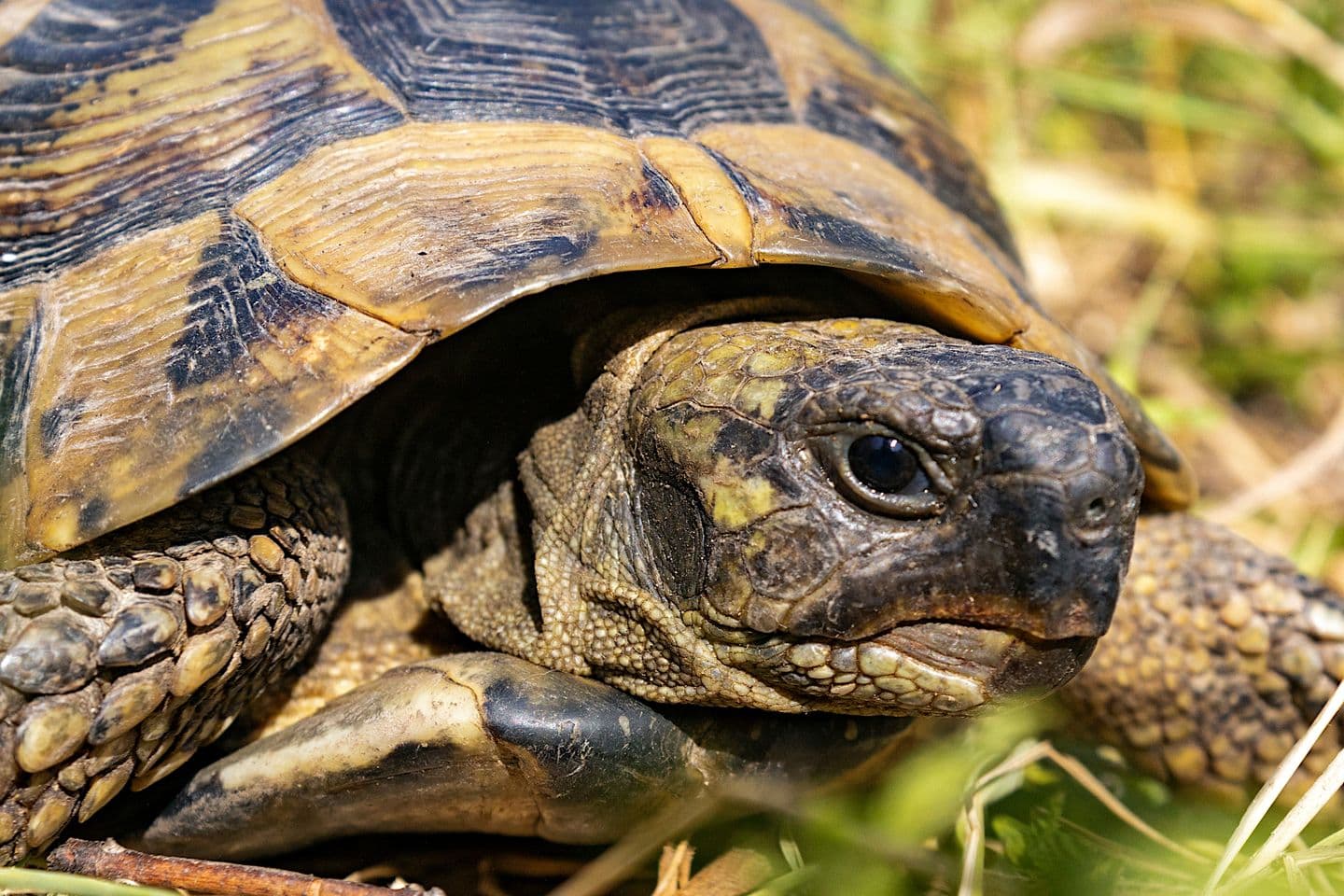
The sulcata, also called the African spurred tortoise, is the third largest tortoise species in the world, and easily the biggest commonly kept as a pet in India. It is a genuinely impressive animal,
The sulcata, also called the African spurred tortoise, is the third largest tortoise species in the world, and easily the biggest commonly kept as a pet in India. It is a genuinely impressive animal, but its eventual size means it is really only suitable for a small number of households.
Origin and legal notes
Sulcatas are native to the semi arid Sahel region of Africa. The species is listed under CITES Appendix II, so importing or keeping one in India requires proper documentation, and buyers should always ask a seller for clear proof of legal origin before purchasing. Owners should also check current reporting and registration requirements for exotic reptiles with their local wildlife authorities.
Appearance and size
Sulcatas start out small and unremarkable but grow steadily for years. Adults commonly reach 60 to 90 centimetres in shell length and can weigh well over 50 kilograms, with some individuals surpassing 90 kilograms. This growth typically continues for well over a decade before slowing.
Housing
This is where most sulcata owners underestimate what they are taking on. An adult needs a genuinely large outdoor space, ideally tens of square metres, with secure fencing sunk well below ground level, since sulcatas are determined and capable diggers. Indoor housing should only be a temporary shelter for cold or wet weather, with an insulated hide or heated shed to retreat into.
Heating and lighting
Sulcatas thrive on strong sunlight and heat, which suits much of India's climate well. A basking area of around 35 degrees Celsius should be available, with cooler retreat zones nearby, and UVB exposure, ideally from natural sunlight, is essential for healthy shell development.
Diet
Sulcatas are grazing herbivores and need a diet built almost entirely around fibre.
Grasses and hay should make up the large majority of the diet
Edible weeds and flowers such as hibiscus can be offered regularly
Leafy greens in smaller amounts, avoiding anything high in oxalates
Fruit should be avoided or given only very rarely, since it is not well suited to their digestive system
Temperament and handling
Sulcatas are generally docile and food motivated, though their strength and size mean handling should always be done carefully, with proper support for their full body weight once they are grown.
Lifespan and commitment
With good care, sulcatas can live 70 years or more, easily outliving the person who first brings one home. This, combined with the space and infrastructure a full grown sulcata demands, makes it a pet best suited to families with a large, secure garden and a genuine multi generational plan for its care.
Bringing home a turtle is not like bringing home a goldfish. A well cared for turtle can easily outlast a school career, a job, and sometimes a marriage. Before you buy that little hatchling from a pe
India's climate, warm for much of the year across most regions, makes an outdoor pond a genuinely appealing option for keepers of aquatic turtles. Done well, it offers more space, natural sunlight, an
Turtles look harmless enough to hand to a child, which is exactly why salmonella linked to pet turtles remains a genuine health concern worldwide, including in India. The good news is that the risk is