UVB and Basking: Lighting for Turtles and Tortoises
Lighting is one of the most important aspects of keeping turtles and tortoises healthy in captivity. While food, water and enclosure size receive considerable attention, inadequate lighting can cause
Lighting is one of the most important aspects of keeping turtles and tortoises healthy in captivity. While food, water and enclosure size receive considerable attention, inadequate lighting can cause serious health problems, particularly metabolic bone disease (MBD).
In the wild, reptiles regulate their body temperature by moving between sunlight and shade. They also obtain ultraviolet B (UVB) radiation from sunlight, which helps their bodies produce vitamin D3. Captive reptiles need an appropriate substitute for these natural conditions.
Why Do Turtles and Tortoises Need UVB?
UVB radiation enables reptiles to synthesise vitamin D3 in their skin. Vitamin D3 is essential for absorbing calcium from food and maintaining healthy bones and shells.
Without sufficient UVB exposure, reptiles may develop metabolic bone disease. This condition can cause:
Soft or deformed shells.
Weak bones and swollen limbs.
Difficulty walking or moving.
Poor growth and fractures.
Reduced appetite and general weakness.
Calcium supplements alone cannot compensate for inadequate UVB exposure.
Understanding the Different Types of Lighting
A properly designed reptile enclosure generally requires two different types of lighting.
1. UVB lighting
UVB bulbs provide the ultraviolet radiation necessary for vitamin D3 production and calcium metabolism. They should be selected according to the species and the UV Index (UVI) required by that species.
Common options include:
Linear fluorescent T5 UVB tubes.
Compact fluorescent UVB bulbs.
Mercury vapour lamps that provide both UVB and heat.
Linear fluorescent tubes are often preferred because they provide more consistent UVB coverage across a basking area.
2. Basking or heat lighting
Reptiles are ectothermic, meaning they depend on external heat sources to regulate their body temperature. A basking lamp creates a warm area where they can raise their body temperature.
A basking lamp should provide sufficient warmth without overheating the enclosure. The temperature should be measured at the animal's actual basking surface using an appropriate thermometer.
UVB and heat lamps serve different purposes. Providing heat does not automatically provide UVB.
Setting Up the Basking Area
Both aquatic turtles and tortoises need a suitable basking area, although their enclosure designs differ.
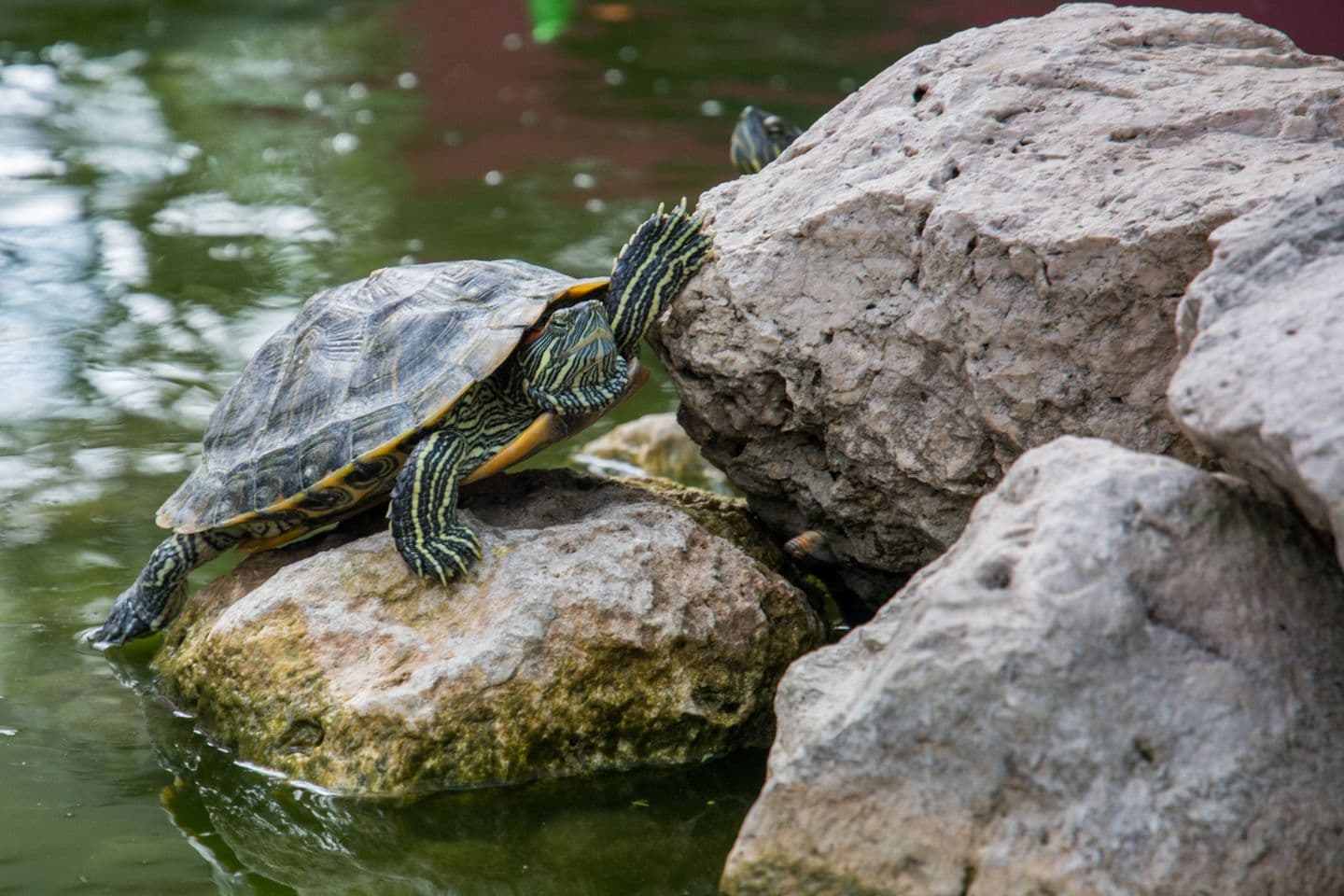
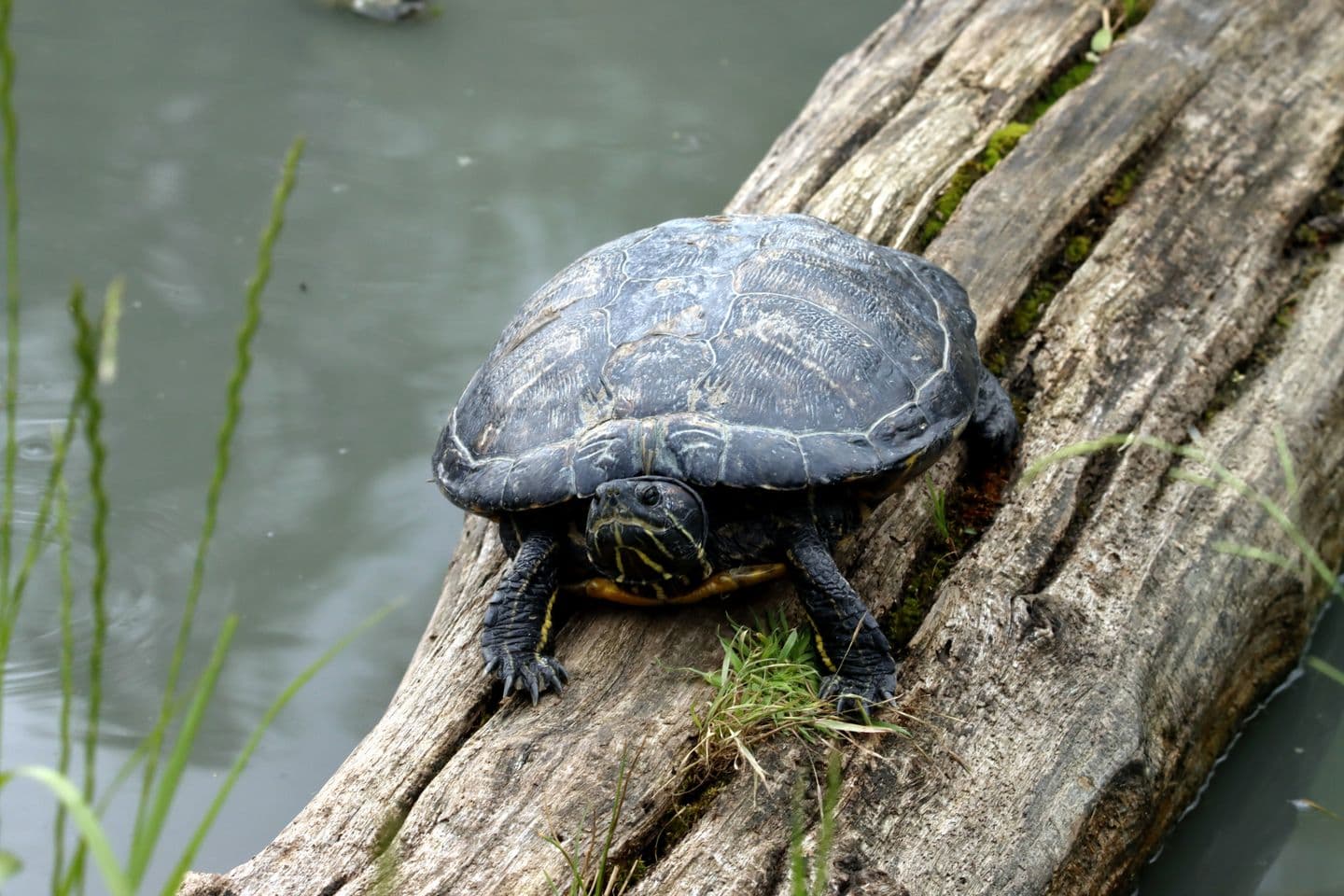
For aquatic turtles, provide a completely dry platform that allows the animal to climb out of the water and dry its entire shell.
For tortoises, create a designated basking zone within the enclosure, allowing them to move away when they become too warm.
The basking area should:
Be large enough for the entire animal.
Have a stable, non-slip surface.
Provide the appropriate temperature for the species.
Allow access to UVB lighting.
Include cooler areas where the animal can retreat.
How Long Should the Lights Remain On?
For most commonly kept tropical and subtropical turtles and tortoises, a photoperiod of approximately 10–12 hours daily is a reasonable starting point. Some species require seasonal adjustments.
Using a timer helps maintain a consistent day-and-night cycle. Lights should generally be switched off at night, unless a species-specific requirement or supplementary heating arrangement makes otherwise necessary.
Choosing and Positioning UVB Bulbs
Not all UVB bulbs provide the same intensity. The correct choice depends on the species, enclosure height, distance from the animal and whether a mesh screen obstructs the light.
A few important precautions:
Follow the manufacturer's recommended installation distance.
Do not place glass or plastic between the UVB bulb and the animal, as these materials block most useful UVB radiation.
Remember that mesh screens can reduce UVB output.
Replace bulbs according to manufacturer recommendations, or when measurements indicate that UVB output has fallen below the required level.
Use a UV Index meter where possible to measure actual exposure at the basking position.
Excessive UVB exposure can also be harmful. More UVB is not necessarily better.
Does Natural Sunlight Replace UVB Lamps?
Natural sunlight can provide excellent UVB exposure when reptiles are housed outdoors. However, sunlight through ordinary glass windows does not provide adequate UVB.
Outdoor enclosures must offer both sunny and shaded areas. Turtles and tortoises should never be left in containers where they cannot escape excessive heat.
The bottom line: UVB lighting and basking heat are essential components of responsible reptile care. They support calcium metabolism, bone development, digestion and normal behaviour. A suitable lighting arrangement, combined with the right diet and enclosure temperatures, helps prevent serious long-term health problems.
Bringing home a turtle is not like bringing home a goldfish. A well cared for turtle can easily outlast a school career, a job, and sometimes a marriage. Before you buy that little hatchling from a pe
India's climate, warm for much of the year across most regions, makes an outdoor pond a genuinely appealing option for keepers of aquatic turtles. Done well, it offers more space, natural sunlight, an
Turtles look harmless enough to hand to a child, which is exactly why salmonella linked to pet turtles remains a genuine health concern worldwide, including in India. The good news is that the risk is