

Birds / Getting Started
Can Cats and Birds Live Together Safely?
It is possible in many Indian households, but it takes real management, not just hoping for the best.
3 min read
Birds / Behaviour
Most pet birds in India get less sleep than they need, and it shows up as crankiness, screaming and even hormonal problems that owners rarely trace back to the real cause.
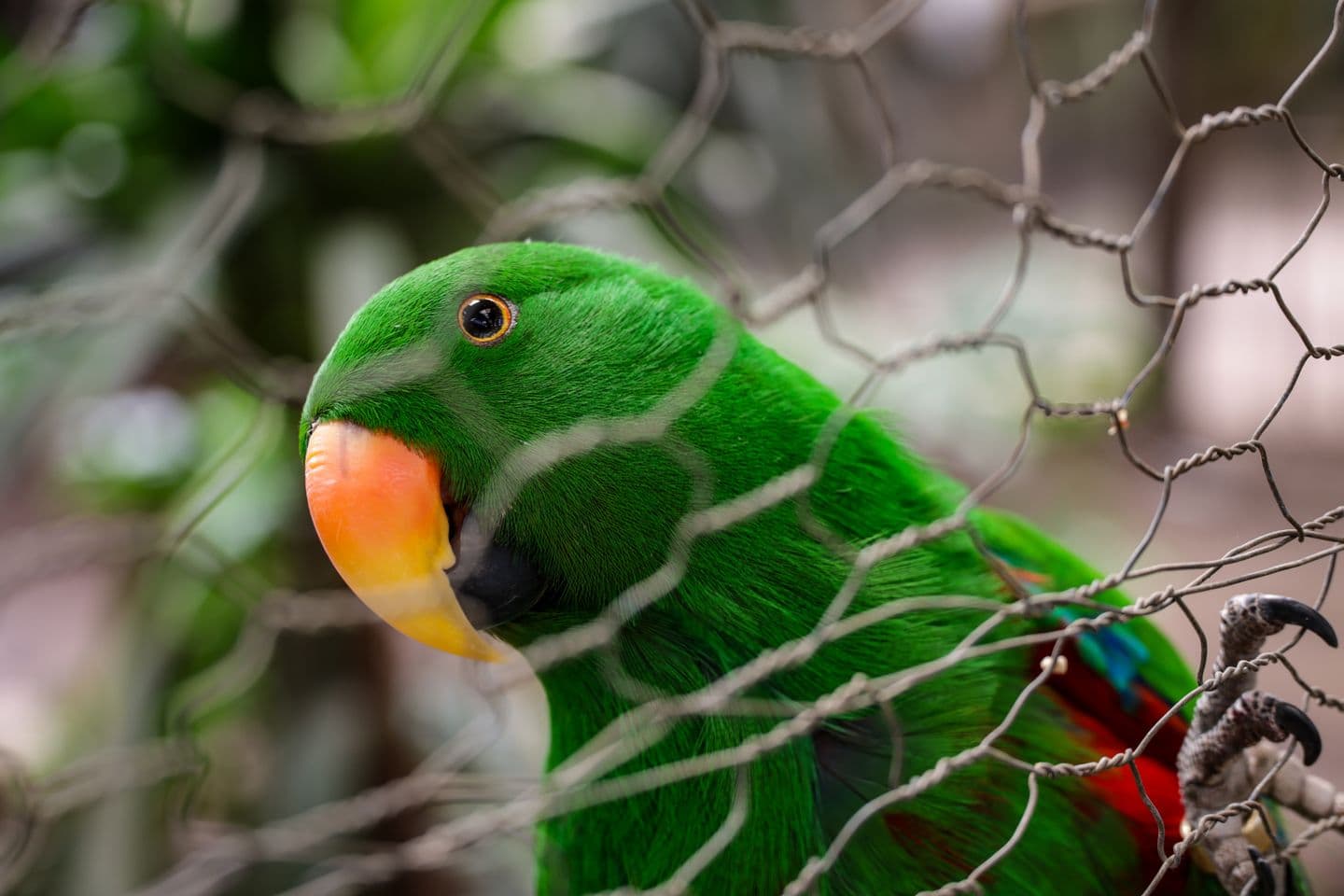
Most pet birds in India get less sleep than they need, and it shows up as crankiness, screaming and even hormonal problems that owners rarely trace back to the real cause.
Wild parrots live close to the equator, where day and night split roughly twelve hours each. That rhythm is wired into them. In the wild, a bird settles into its roost just before dusk, spends the night with half its brain still on watch for predators, a trick scientists call unihemispheric sleep, and wakes with the first light. A pet bird in a Bengaluru or Mumbai apartment still carries that same internal clock, even though the household around it keeps very different hours.
Most companion birds need between ten and twelve hours of uninterrupted, dark, quiet sleep every night. Falling short of this is one of the most common and most overlooked causes of behaviour problems, including screaming, feather plucking and touchiness that owners often blame on personality rather than exhaustion.
A well rested bird tucks one leg up into its belly feathers, turns its head backward and rests its beak into its back or shoulder feathers, and may sleep on one foot for stability. Some species, including many parakeets and lovebirds, sleep on both feet. A bird may also nap lightly during the day, often standing on one leg with eyes half closed, ready to snap awake at the smallest sound.
Sleeping flat on the floor of the cage is not a normal position for most parrots and can be a sign of illness, injury or extreme fatigue, and is worth a vet visit rather than a shrug.
Chronic sleep deprivation can push a bird toward chronic hormonal behaviour, feather damaging habits and a weaker immune system. If your bird has suddenly become short tempered, loud or clingy, look at its sleep schedule before assuming it is a training problem. Sometimes the kindest fix is not a new toy or a training session, but simply an earlier, darker, quieter bedtime.
Article content © S Vejay Anand. All rights reserved.
Birds / Getting Started
It is possible in many Indian households, but it takes real management, not just hoping for the best.
3 min read

Birds / Health
From paratyphoid to a lung condition now worrying doctors in Mumbai and Delhi, here is what every pigeon keeper and balcony feeder in India should know.
4 min read

Birds / Getting Started
Almost every Indian home has a money plant trailing along a shelf or a tulsi pot on the balcony. Most owners never think twice about it until their bird takes an interested peck, so it is worth knowin
3 min read