
Birds / Getting Started
Can Cats and Birds Live Together Safely?
It is possible in many Indian households, but it takes real management, not just hoping for the best.
3 min read
Birds / Breeds
Quieter and gentler than most of its Aratinga cousins, the blue-crowned conure is often the calmest choice in a genuinely loud family of birds.
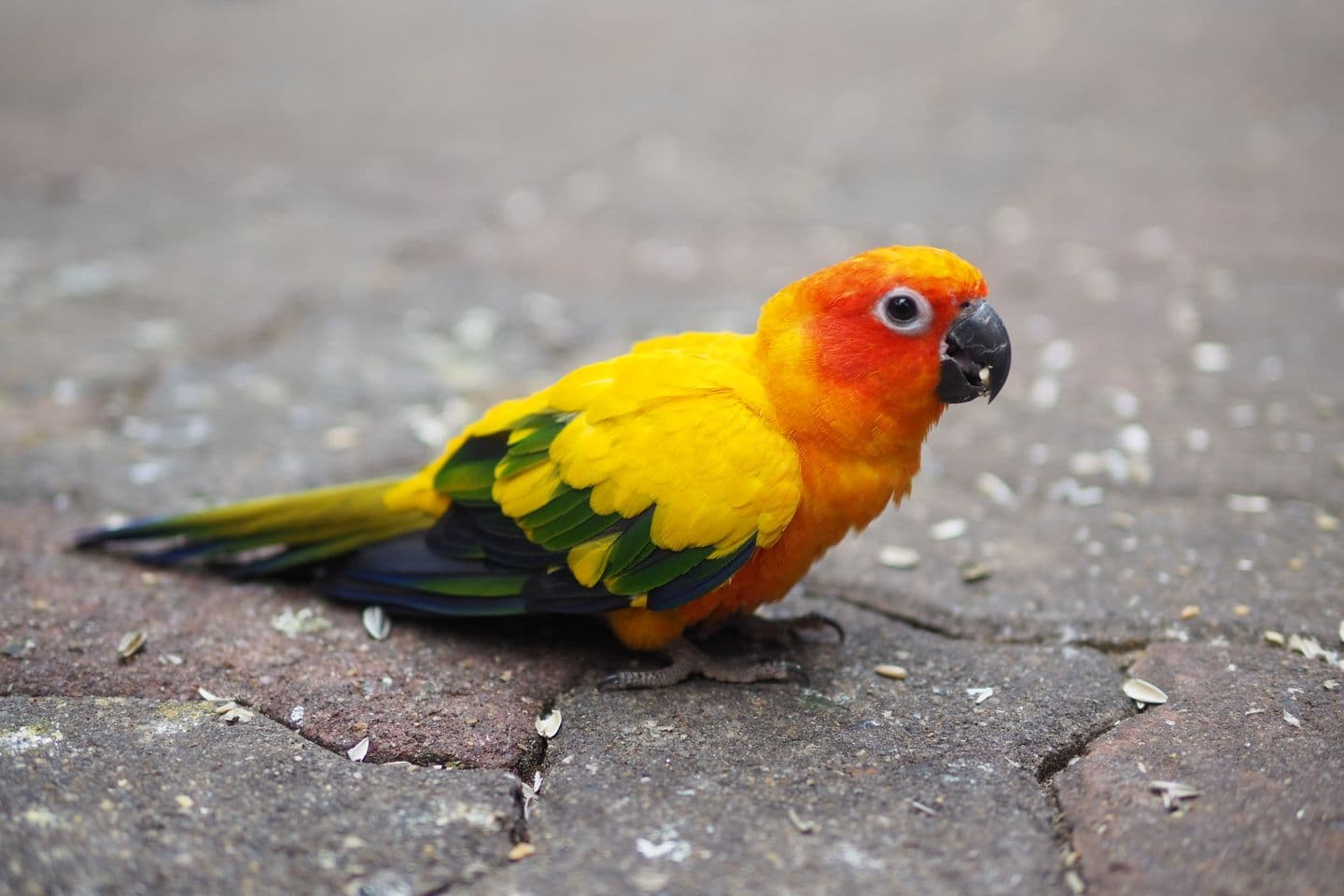
Quieter and gentler than most of its Aratinga cousins, the blue-crowned conure is often the calmest choice in a genuinely loud family of birds.
Named for the turquoise-blue crown and face that stand out against its otherwise green body, the blue-crowned conure has a reputation within the Aratinga group as an unusually amiable, easy-going bird, and even gained a moment of pop-culture fame as the title character's species in the 1998 film Paulie.
Blue-crowned conures are considered one of the most affectionate and even-tempered conure species, generally less nippy and less piercing in voice than their sun or Jenday cousins, though still capable of loud calling when excited or startled. They reach breeding maturity around two to three years and, if kept as a single bird, need substantial hands-on attention from their owner to stay well-adjusted.
A diet built on quality pellets, fresh fruit and vegetables, and occasional nuts suits this species well, following the same general principles as other conures.
A spacious cage with room to climb and play, daily out-of-cage time, and a good supply of chew toys keep a blue-crowned conure both physically and mentally healthy. Its moderate noise level makes it a somewhat more apartment-friendly choice than louder conure relatives, though it is still a genuinely vocal bird by any broader standard.
Blue-crowned conures are notably long-lived for a mid-sized parrot, commonly reaching 25 to 30 years and occasionally up to 40 years with excellent care.
Like other conures, blue-crowned conures are prone to feather plucking and other stress behaviours if kept isolated for long periods, and to nutritional deficiencies on a seed-heavy diet. Conure bleeding syndrome, a poorly understood condition causing spontaneous bleeding from the skin or feather follicles, has been documented in this genus and warrants an immediate avian vet visit if ever observed.
Article content © Ravi Teja. All rights reserved.
Birds / Getting Started
It is possible in many Indian households, but it takes real management, not just hoping for the best.
3 min read
Birds / Health
From paratyphoid to a lung condition now worrying doctors in Mumbai and Delhi, here is what every pigeon keeper and balcony feeder in India should know.
4 min read
Birds / Getting Started
Almost every Indian home has a money plant trailing along a shelf or a tulsi pot on the balcony. Most owners never think twice about it until their bird takes an interested peck, so it is worth knowin
3 min read