
Birds / Getting Started
Can Cats and Birds Live Together Safely?
It is possible in many Indian households, but it takes real management, not just hoping for the best.
3 min read
Birds / Breeds
The world's most popular pet bird earns its reputation with an easy temperament, real intelligence and a personality far bigger than its size.
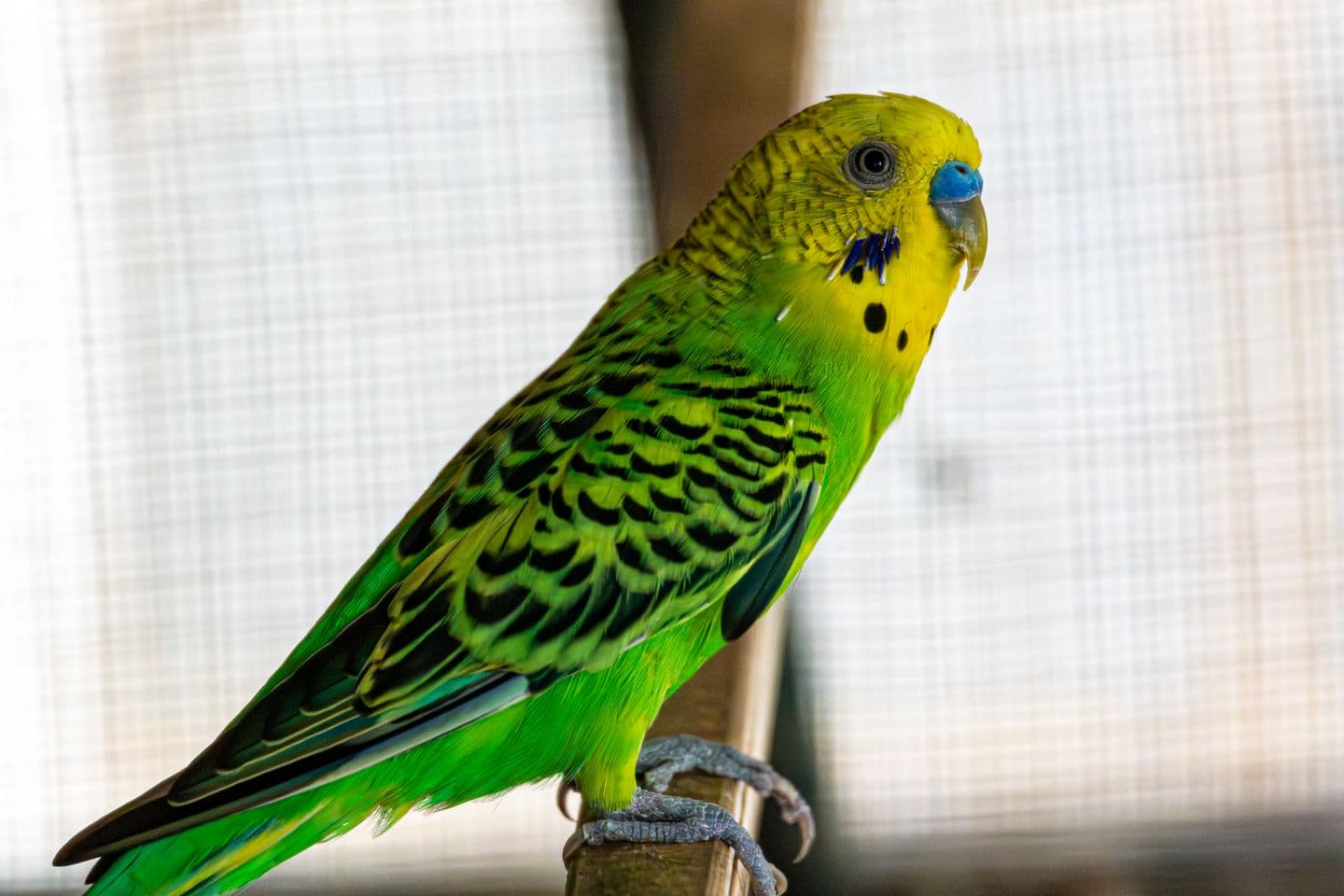
The world's most popular pet bird earns its reputation with an easy temperament, real intelligence and a personality far bigger than its size.
Budgerigars, universally known as budgies, are widely cited as being among the most popular pets in the world, after dogs and cats, and it is easy to see why. Small, colourful, genuinely intelligent and considerably easier to accommodate than most other parrots, they are frequently the first bird a family in India brings home, and often turn out to be far more interesting companions than their low price and small size suggest.
Native to the arid grasslands of Australia, wild budgies are green and yellow with black scalloped markings, while captive breeding has produced an enormous range of colour mutations including blue, violet, white and grey. They are naturally flock birds, highly social, and do best kept in pairs or small groups if the owner cannot offer several hours of daily interaction, though a single, well-socialised budgie bonds closely with its owner and can become a confident talker.
A good budgie diet centres on a quality pelleted mix, ideally making up the majority of daily intake, supplemented with fresh vegetables, leafy greens and limited fruit. A seed-only diet, still the default in many Indian pet shops, is nutritionally incomplete on its own and should be treated as a partial component rather than the whole meal.
Budgies need a cage that allows real horizontal flight room rather than just height, since they are active fliers, along with a variety of perches of different diameters to support foot health. Daily supervised time outside the cage, along with toys for chewing and foraging, keeps a budgie mentally engaged. Their beaks grow continuously, so chew-safe toys and perches also serve a genuine health function beyond entertainment.
Budgies typically live five to ten years, with some reaching fifteen or more given excellent diet, housing and veterinary care. This shorter lifespan compared to larger parrots makes them a genuinely good choice for a family wanting the experience of bird ownership without a multi-decade commitment.
Budgies are one of the easier pet birds to sex visually once mature, thanks to the cere, the small fleshy area above the beak where the nostrils sit. In most colour mutations, adult males have a blue or purplish-blue cere, while adult females have a cere that is brown, tan or a crusty beige, especially when in breeding condition. Young budgies of both sexes often show a pinkish or pale cere that has not yet developed its adult colour, so sexing a bird under a few months old by cere colour alone is unreliable, and a vet or experienced breeder is a better judge at that age.
Article content © Ravi Teja. All rights reserved.
Birds / Getting Started
It is possible in many Indian households, but it takes real management, not just hoping for the best.
3 min read
Birds / Health
From paratyphoid to a lung condition now worrying doctors in Mumbai and Delhi, here is what every pigeon keeper and balcony feeder in India should know.
4 min read
Birds / Getting Started
Almost every Indian home has a money plant trailing along a shelf or a tulsi pot on the balcony. Most owners never think twice about it until their bird takes an interested peck, so it is worth knowin
3 min read