

Birds / Getting Started
Can Cats and Birds Live Together Safely?
It is possible in many Indian households, but it takes real management, not just hoping for the best.
3 min read
Birds / Breeds
Cheerful, easy-going and endlessly whistling, the cockatiel remains one of the best all-round first parrots a family can choose.
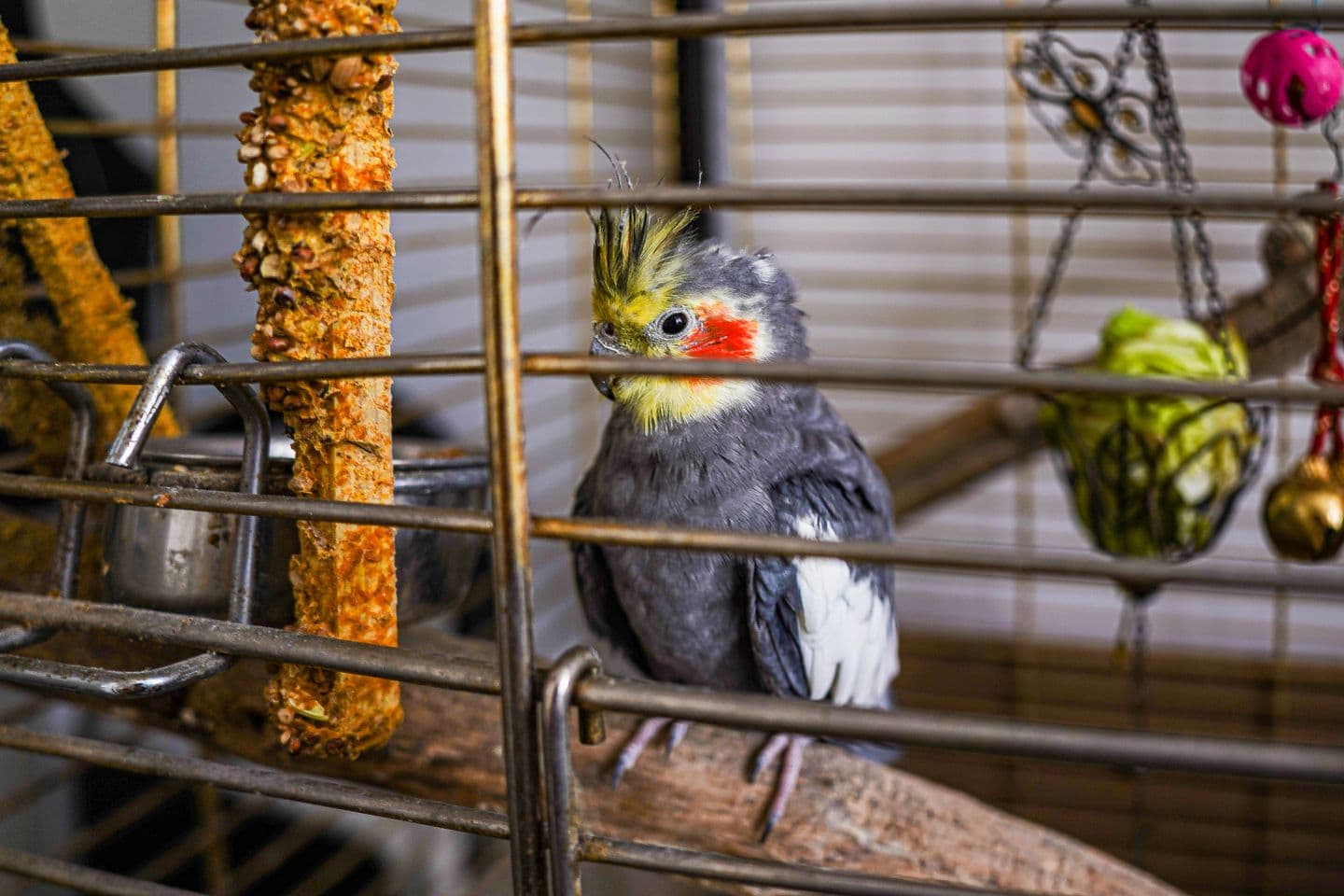
Cheerful, easy-going and endlessly whistling, the cockatiel remains one of the best all-round first parrots a family can choose.
The cockatiel is one of the most beloved pet birds anywhere, and it earns that reputation honestly. Small enough to suit most Indian homes, gentle enough for a first-time owner, and expressive enough that its crest alone tells you its mood, the cockatiel strikes a balance few other parrot species manage between easy care and genuine personality.
Native to Australia, the cockatiel is technically the smallest member of the cockatoo family, recognisable by its expressive crest, grey body and, in the classic wild-type colouring, bright orange cheek patches with a yellow face on mature males. Females are generally duller in colour and produce a flatter, less musical call compared to the male's melodic whistle. Cockatiels are social, affectionate and rarely aggressive, with most bites being a startled nip rather than genuine hostility. Their crest position is a genuinely useful mood indicator: upright and alert when curious or startled, flattened close to the head when frightened or annoyed, and gently held back when relaxed and content.
A cockatiel does best on a base of good-quality pellets, supplemented with fresh vegetables, leafy greens, sprouted seeds and limited fruit, along with occasional cooked egg or legumes for extra protein, particularly during a moult. A seed-only diet is a common default in Indian pet shops but leads to nutritional gaps over time and should be offered only as a minor part of the diet.
Cockatiels are strong, capable fliers and need a cage that allows real room to move, along with daily supervised time outside it. They tend to soil their cage more than some other species, so a removable base tray that is easy to clean is a practical must. Chew-safe toys, foraging opportunities and varied perch widths all support both mental stimulation and foot health.
With good care, a cockatiel typically lives 15 to 25 years, with some individuals reaching well beyond that. This is a real long-term commitment, though considerably shorter than many of the larger parrot species.
Cockatiels are strong, confident fliers, and many Indian owners choose to have a vet or experienced groomer trim the flight feathers to reduce the risk of the bird escaping through an open window or colliding with a ceiling fan. This is a genuine trade-off rather than an obvious choice: a clipped bird is safer in an unmodified home but loses a natural behaviour important to its fitness and confidence, while a flighted bird needs a consistently bird-proofed space, fans off and windows and doors checked every single time it is out. Neither option is automatically right, and it is worth discussing with an avian vet what suits your specific home and how careful your household can realistically be, rather than defaulting to one option without thinking it through.
Article content © S Vejay Anand. All rights reserved.
Birds / Getting Started
It is possible in many Indian households, but it takes real management, not just hoping for the best.
3 min read

Birds / Health
From paratyphoid to a lung condition now worrying doctors in Mumbai and Delhi, here is what every pigeon keeper and balcony feeder in India should know.
4 min read

Birds / Getting Started
Almost every Indian home has a money plant trailing along a shelf or a tulsi pot on the balcony. Most owners never think twice about it until their bird takes an interested peck, so it is worth knowin
3 min read