
Birds / Getting Started
Can Cats and Birds Live Together Safely?
It is possible in many Indian households, but it takes real management, not just hoping for the best.
3 min read
Birds / Breeds
With around 100 species and subspecies, calling something a conure tells you surprisingly little on its own. Here is what actually holds the group together.
With around 100 species and subspecies, calling something a conure tells you surprisingly little on its own. Here is what actually holds the group together.
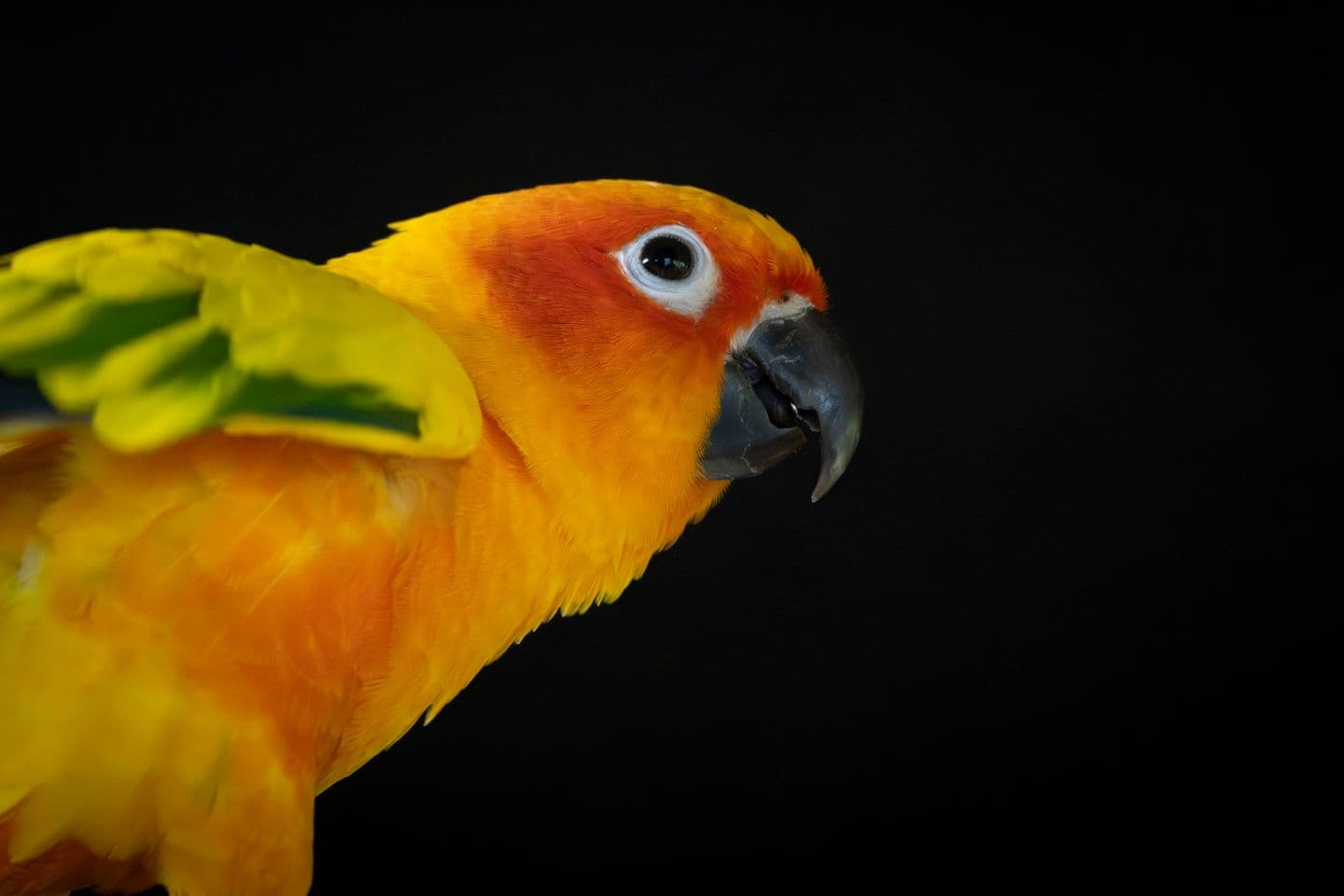
Conure is not a single species but a broad, informal name covering close to a hundred small to medium South American parrot species and subspecies, most of them in the Aratinga and Pyrrhura genera. This overview covers what is broadly true across the group, since several named conure species, the sun conure, blue-crowned conure and Jenday conure among them, are covered individually elsewhere in this series.
Conures are social, bold, playful and often described as the clowns of the parrot world, frequently seen hanging upside down, wrestling with toys or wanting to be part of whatever their owner is doing. Most have a bare, featherless ring around the eye, and their colouring ranges across vivid combinations of green, red, orange and blue depending on species. A key trait across the group is a tendency to bond broadly with the family rather than fixating on one person, making conures generally easier to share among household members than some other parrot species.
A diet built on quality pellets, fresh fruit and vegetables, and occasional nuts suits most conure species well. They are active, playful eaters and enjoy foraging-style feeding that makes them work a little for their food.
Conures are active birds needing a spacious cage, generally at least 36 inches long, 24 inches wide and 24 inches high as a baseline, along with daily out-of-cage time and a steady supply of chew toys for their busy beaks. They do poorly with prolonged isolation and can develop feather plucking or other stress behaviours without enough daily interaction.
Most conure species live 20 to 25 years in captivity with good care, with some individuals reaching 30 years or more, a genuine multi-decade commitment despite their relatively small size.
Volume varies significantly across the group. Some conures in the Aratinga genus, sun and Jenday conures included, are genuinely loud and prone to piercing calls, while others, the blue-crowned conure being a well-known exception within its own genus, are noticeably quieter. It is worth researching the specific species rather than assuming all conures are equally loud or equally quiet.
With so many conure species available, the most useful way to narrow the choice is to rank your own priorities and match against them rather than picking on colour alone. If noise tolerance is your main concern, the blue-crowned conure or a Pyrrhura species such as the green-cheeked conure will suit a quieter household far better than a sun or Jenday conure. If striking colour matters most, the sun and Jenday conures are hard to beat. If you specifically want a bird that rides quietly on a shoulder for long stretches, Jenday and blue-crowned conures both have strong reputations for this. None of the individually named conure species in this series is meaningfully harder to care for than another, so temperament and noise fit are usually the deciding factors.
Article content © Ravi Teja. All rights reserved.
Birds / Getting Started
It is possible in many Indian households, but it takes real management, not just hoping for the best.
3 min read
Birds / Health
From paratyphoid to a lung condition now worrying doctors in Mumbai and Delhi, here is what every pigeon keeper and balcony feeder in India should know.
4 min read
Birds / Getting Started
Almost every Indian home has a money plant trailing along a shelf or a tulsi pot on the balcony. Most owners never think twice about it until their bird takes an interested peck, so it is worth knowin
3 min read