
Birds / Getting Started
Can Cats and Birds Live Together Safely?
It is possible in many Indian households, but it takes real management, not just hoping for the best.
3 min read
Birds / Breeds
Clever, sociable and famous for being the only parrot that builds giant communal nests, the Quaker parrot is also one of the more legally complicated birds outside India.
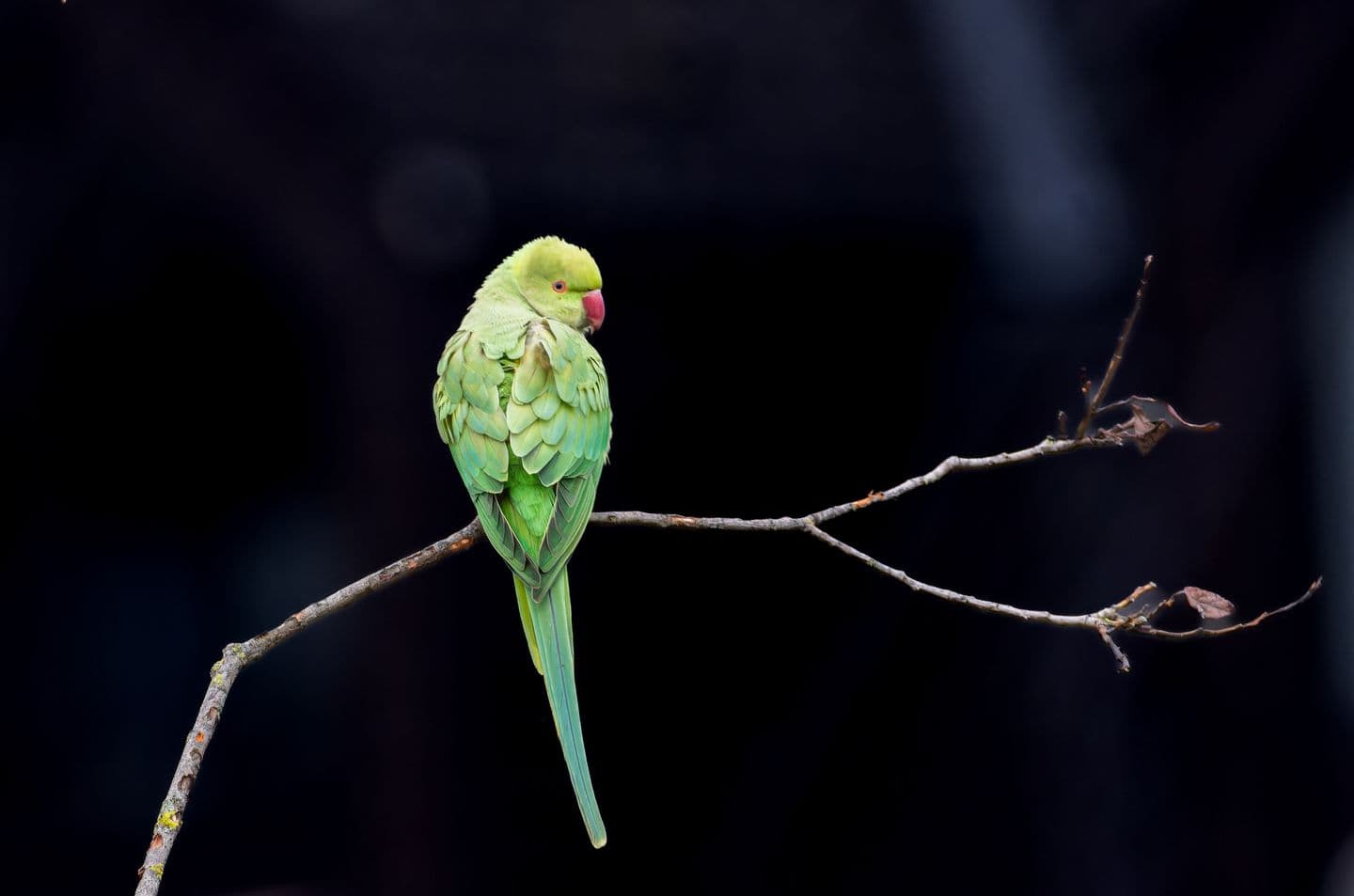
Clever, sociable and famous for being the only parrot that builds giant communal nests, the Quaker parrot is also one of the more legally complicated birds outside India.
The Quaker parrot, also called the monk parakeet, is a small, bright green South American parrot known for genuine intelligence, a strong ability to mimic speech, and a truly unusual trait among parrots: building large, elaborate, multi-chambered communal stick nests rather than nesting in a simple tree cavity.
Unlike most of the legal complications discussed elsewhere in this series, which concern India specifically, the Quaker parrot's most notable legal restrictions are in the United States and parts of Europe, where feral populations have established themselves after escapes and been found to damage crops and build heavy nests on utility infrastructure. Around ten US states restrict or ban private ownership as a result. This has no direct bearing on Indian ownership, since the bird is not native to South Asia and does not carry the Wildlife Protection Act complications that native Indian species do, but it is a genuinely interesting example of how the same species can be freely available in one country and banned in another purely because of its behaviour as a potential invasive species.
Quaker parrots are highly social, intelligent, and often described as having a personality far bigger than their small size suggests. Both sexes look alike, mostly bright green with a grey chest, face and throat. They are capable talkers, with vocabularies reportedly reaching fifty words or more, and are known for bonding intensely with their owner, sometimes to the point of jealousy toward other people or pets.
A diet built on quality pellets, fresh vegetables and limited fruit suits Quaker parrots well. They are prone to obesity and fatty liver disease on a rich, seed-heavy diet, so portion control and regular exercise matter.
A roomy cage, daily out-of-cage time, and plenty of chew toys and shreddable material suit this naturally nest-building species well, since many captive Quakers enjoy building and rearranging nest-like structures even without a mate. They are vocal birds capable of a surprisingly loud call for their size.
Quaker parrots commonly live 20 to 30 years with good care, a genuine long-term commitment for such a small bird.
Article content © Ravi Teja. All rights reserved.
Birds / Getting Started
It is possible in many Indian households, but it takes real management, not just hoping for the best.
3 min read
Birds / Health
From paratyphoid to a lung condition now worrying doctors in Mumbai and Delhi, here is what every pigeon keeper and balcony feeder in India should know.
4 min read
Birds / Getting Started
Almost every Indian home has a money plant trailing along a shelf or a tulsi pot on the balcony. Most owners never think twice about it until their bird takes an interested peck, so it is worth knowin
3 min read