
Birds / Getting Started
Can Cats and Birds Live Together Safely?
It is possible in many Indian households, but it takes real management, not just hoping for the best.
3 min read
Birds / Getting Started
Choosing a family-friendly bird means balancing a child's excitement with a species that can genuinely handle a busy household.
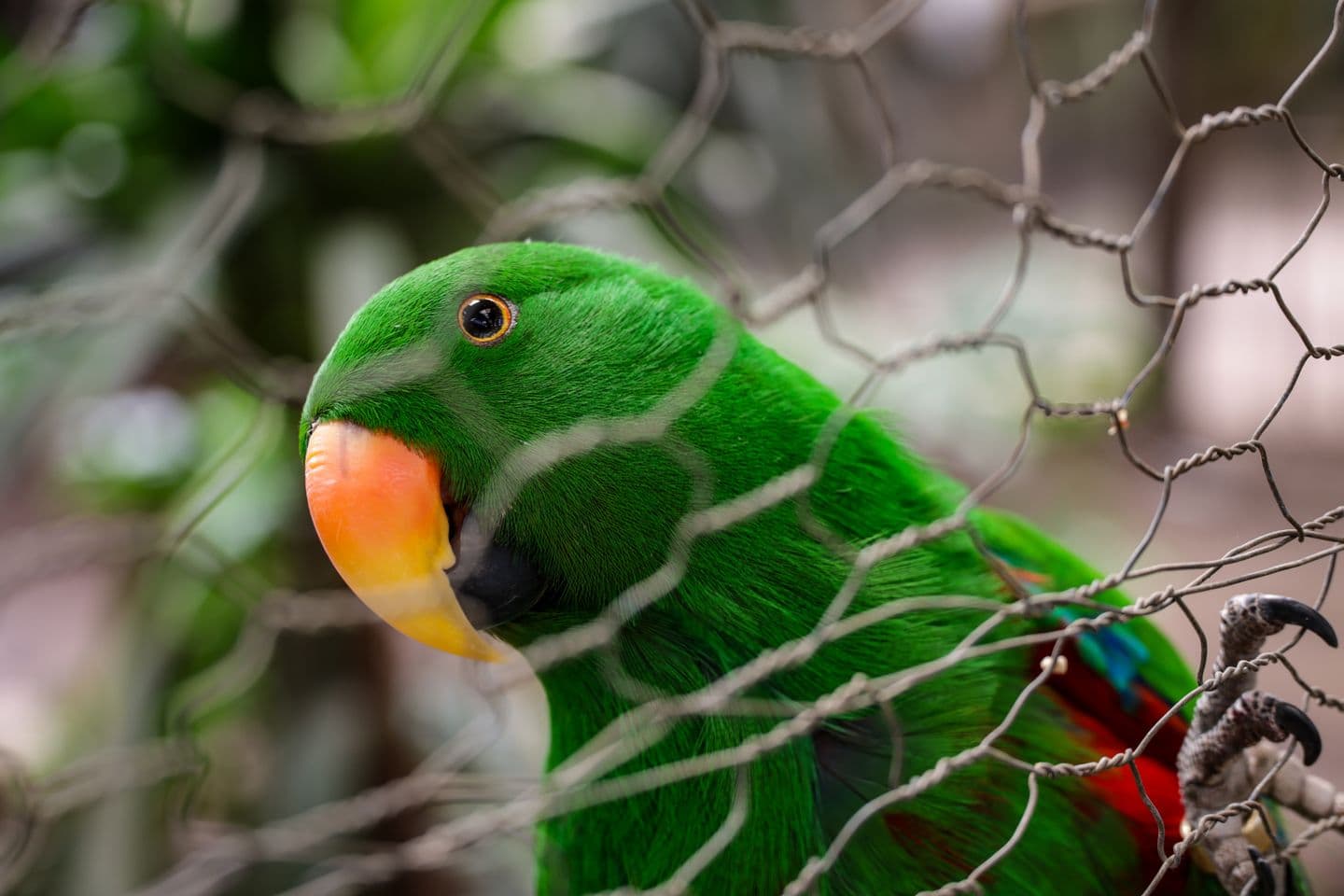
Choosing a family-friendly bird means balancing a child's excitement with a species that can genuinely handle a busy household.
Birds can be wonderful pets for children, teaching responsibility and gentle handling in a way that is different from a dog or cat, but not every species suits a home with young kids. Loud households, sudden noises, quick movements and a child's naturally shorter attention span all need to be factored into the choice.
It is worth being upfront about something many families do not realise: several birds that feel like the obvious "Indian" choice, including the rose-ringed parakeet, are native wild species protected under the Wildlife Protection Act, and keeping a wild-caught individual is illegal. This is not a reason to avoid Indian bird-keeping altogether, but it does mean the birds best suited to a family with children are, in practice, the widely available non-native species below rather than birds caught from the wild.
Larger parrots such as African greys, macaws, Amazons and cockatoos have a bite force that can genuinely injure a child, long lifespans that outlast childhood pet enthusiasm, and complex emotional needs that are difficult for a young child to meet consistently. These birds are better suited to a household where an adult is the primary caregiver and a child interacts under close supervision, rather than birds chosen specifically for a child to look after independently.
Whatever species you choose, an adult should always supervise early interactions, and children should be taught to approach the cage calmly, use a quiet voice, and never put fingers through the bars of a bird they do not know well. Giving a child one clear, simple daily task, such as topping up water or offering a treat at a set time, builds a genuine bond and a sense of responsibility without exposing either the child or the bird to unnecessary risk.
Most bites happen because a bird gave a clear warning that went unnoticed, not because it attacked without reason. Even young children can learn to spot the basics: feathers held tightly against the body and a bird leaning away means it wants space, while feathers puffed up combined with a fixed stare, pinned eyes that rapidly widen and narrow, or an open beak lean is a bird telling you clearly to back off. Teaching a child to recognise these signs and step back calmly, rather than pushing forward with a hand, prevents the great majority of bites in family homes and also teaches genuine respect for the bird as a living creature with its own preferences, not just a toy that occasionally nips.
Article content © Ravi Teja. All rights reserved.
Birds / Getting Started
It is possible in many Indian households, but it takes real management, not just hoping for the best.
3 min read
Birds / Health
From paratyphoid to a lung condition now worrying doctors in Mumbai and Delhi, here is what every pigeon keeper and balcony feeder in India should know.
4 min read
Birds / Getting Started
Almost every Indian home has a money plant trailing along a shelf or a tulsi pot on the balcony. Most owners never think twice about it until their bird takes an interested peck, so it is worth knowin
3 min read