

Birds / Getting Started
Can Cats and Birds Live Together Safely?
It is possible in many Indian households, but it takes real management, not just hoping for the best.
3 min read
Birds / Getting Started
Not every species is a natural talker, and not every bird within a talking species will speak, but with the right approach and a lot of patience, most owners can encourage at least a few clear words.
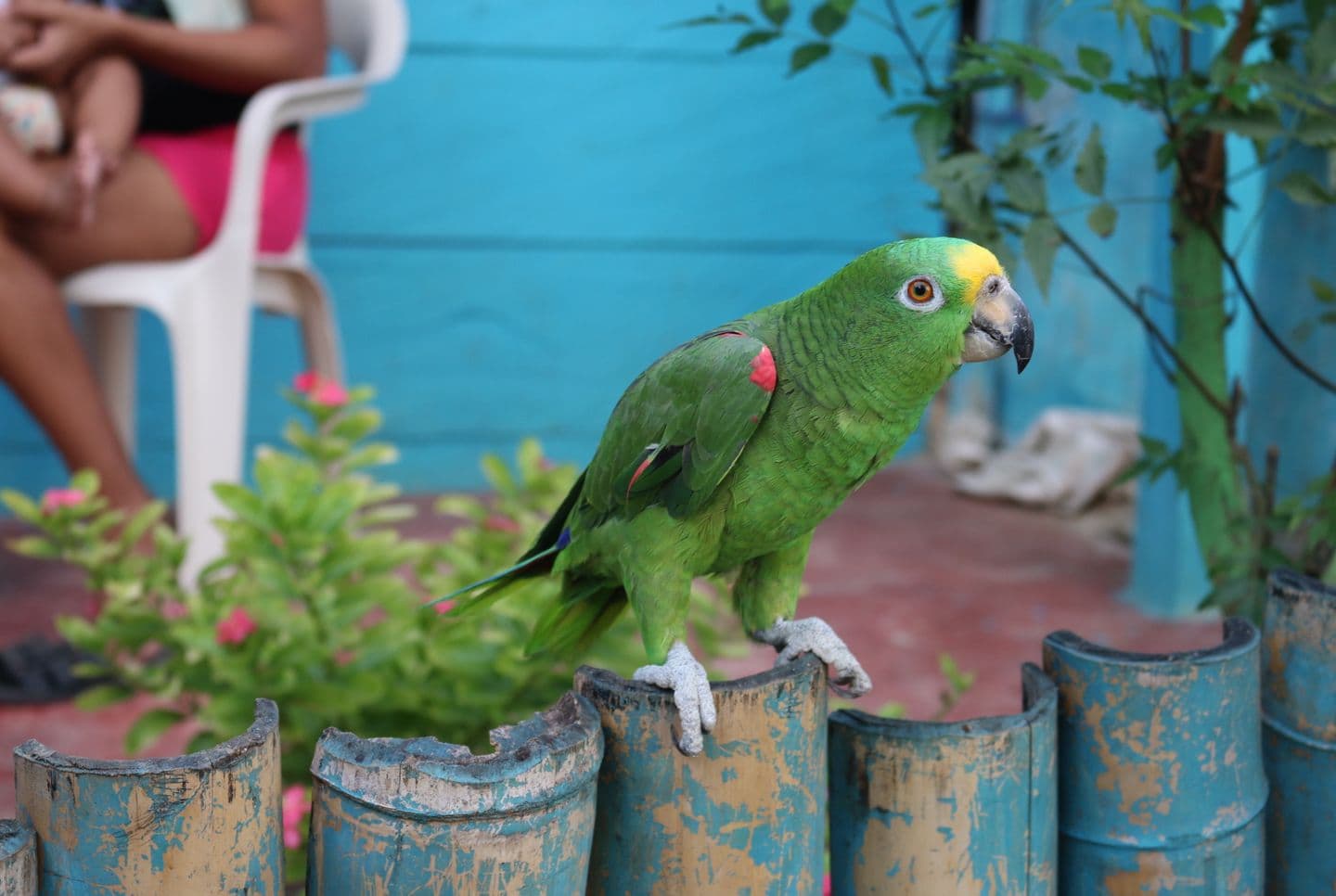
Not every species is a natural talker, and not every bird within a talking species will speak, but with the right approach and a lot of patience, most owners can encourage at least a few clear words.
African greys, budgerigars, Alexandrine parakeets and Indian ringnecks are among the species most commonly noted for their mimicking ability, though individual birds vary enormously. Some birds never become confident talkers no matter how much effort goes in, and that is not a failure on the owner's part. A bird's personality, confidence and bond with its family all play a bigger role than most owners expect.
Birds talk because they want to connect, not because they are performing a trick. A bird that does not yet trust its household is unlikely to feel motivated to communicate. Spend time simply being near your bird, talking to it throughout the day, narrating what you are doing while you feed it, clean the cage or tidy the room nearby, well before you begin structured training.
Birds pick up language fastest when a word is tied to an action or an emotional moment. Saying good morning every time you uncover the cage, or naming a toy every time you hand it over, helps the bird build a genuine association rather than simply repeating sounds without context. This is also why birds often pick up household sounds, doorbells, phone ringtones or a family member's laugh, entirely on their own, without any deliberate teaching at all.
If your bird picks up a word or sound you would rather it did not repeat, resist the urge to react strongly, since birds often find a dramatic reaction rewarding and will repeat the word more, not less. The better approach is to simply ignore it entirely, leaving the room or turning away, while continuing to reinforce the words you do want.
Some birds start mimicking within weeks, others take months, and a few individuals may never become fluent talkers regardless of species. Keep sessions positive, never force interaction when your bird seems tired or uninterested, and remember that a quiet, content bird that simply enjoys your company is just as successful a pet as a chatty one.
Many Indian households naturally speak more than one language at home, and a bird raised in that environment will happily pick up words and phrases in whichever language it hears most often, whether that is Hindi, English or a regional language, and sometimes a cheerful mix of two. There is no need to stick to English words for training. Whatever greeting or phrase your family actually uses every day is the one your bird will learn fastest, since familiarity and repetition matter far more than the specific language.
Article content © S Vejay Anand. All rights reserved.
Birds / Getting Started
It is possible in many Indian households, but it takes real management, not just hoping for the best.
3 min read

Birds / Health
From paratyphoid to a lung condition now worrying doctors in Mumbai and Delhi, here is what every pigeon keeper and balcony feeder in India should know.
4 min read

Birds / Getting Started
Almost every Indian home has a money plant trailing along a shelf or a tulsi pot on the balcony. Most owners never think twice about it until their bird takes an interested peck, so it is worth knowin
3 min read