
Birds / Getting Started
Can Cats and Birds Live Together Safely?
It is possible in many Indian households, but it takes real management, not just hoping for the best.
3 min read
Birds / Getting Started
Bird aging does not map neatly onto the dog-year comparisons most people already know. Here is a more useful way to think about it.
Bird aging does not map neatly onto the dog-year comparisons most people already know. Here is a more useful way to think about it.
Unlike dogs, where a rough "multiply by seven" comparison has become popular shorthand, birds age in a way that varies dramatically by species and does not translate into a single simple formula. A five-year-old budgie and a five-year-old macaw are at very different points in their respective lifespans, and treating them the same way misses something important about how to care for each.
Lifespan across pet bird species ranges enormously, from five to ten years for a budgie to twenty-five years or more for an Indian ringneck, and sixty years or beyond for some macaws and cockatoos. A more useful way to think about a bird's age is as a proportion of its expected lifespan, roughly comparing where the bird sits in its own species' life stages, infancy, adolescence, adulthood and senior years, rather than converting to a fixed human-year number.
Rather than fixating on a precise age-equivalent, it is more useful to watch for the practical markers of ageing specific to your bird: reduced activity, changes in feather condition, slower response to training, or the onset of common age-related issues such as arthritis or cataracts in older large parrots. An avian vet, who can assess these signs directly, gives a far more accurate read on your bird's genuine life stage than any age conversion chart.
None of these signs need to be alarming on their own, they are a normal part of a long-lived companion animal getting older. What they are useful for is prompting more frequent vet check-ins and small adjustments to diet, perch types and activity expectations as a bird moves into its own species' senior years, whenever that happens to fall.
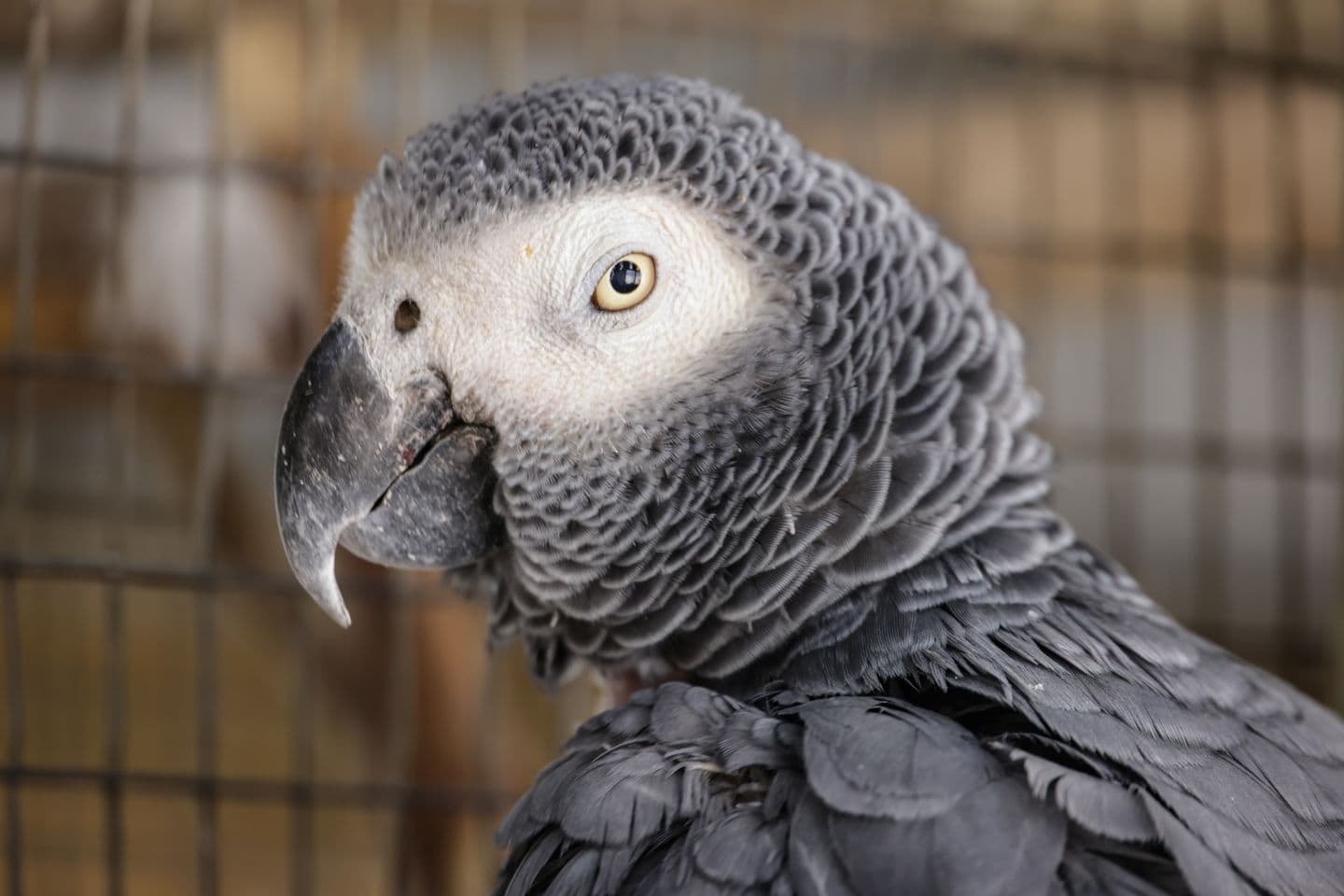
One of the most useful things this way of thinking highlights is just how much a young parrot still has ahead of it. A five-year-old African grey is, in a very real sense, still a teenager by the standards of its own species, which is worth remembering both for the decades of commitment still to come and for the patience some behaviour phases genuinely warrant before assuming they are permanent.
Article content © S Vejay Anand. All rights reserved.
Birds / Getting Started
It is possible in many Indian households, but it takes real management, not just hoping for the best.
3 min read
Birds / Health
From paratyphoid to a lung condition now worrying doctors in Mumbai and Delhi, here is what every pigeon keeper and balcony feeder in India should know.
4 min read
Birds / Getting Started
Almost every Indian home has a money plant trailing along a shelf or a tulsi pot on the balcony. Most owners never think twice about it until their bird takes an interested peck, so it is worth knowin
3 min read