
Birds / Getting Started
Can Cats and Birds Live Together Safely?
It is possible in many Indian households, but it takes real management, not just hoping for the best.
3 min read
Birds / Getting Started
India's most iconic pet bird is also its most legally complicated one. Here is what every prospective owner needs to know before bringing one home.
India's most iconic pet bird is also its most legally complicated one. Here is what every prospective owner needs to know before bringing one home.
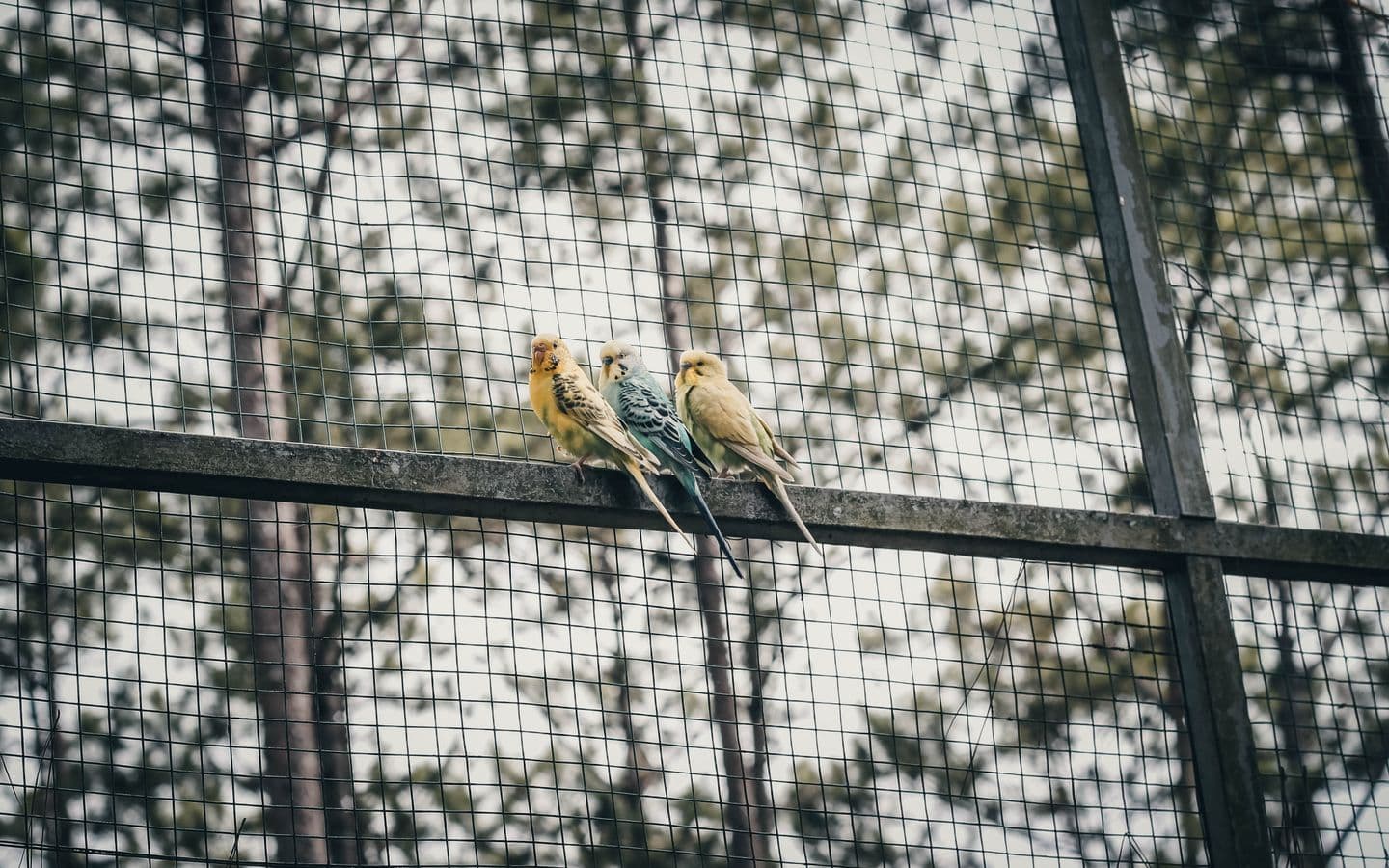
Walk through almost any Indian neighbourhood and you will hear the Indian Ringneck before you see it, a sharp, ringing call from a flash of green overhead. Formally known as the rose-ringed parakeet (Psittacula krameri), this bird has been part of Indian life for centuries, appearing in Mughal miniature paintings as a companion of royalty and, today, as one of the most commonly kept parrots in the country. It is also, legally, one of the most complicated birds you can own.
The Indian Ringneck is a native Indian species and falls under Schedule IV of the Wildlife Protection Act, 1972. Capturing, trading or keeping a wild-caught individual is illegal, and violations can carry penalties including imprisonment. In practice, enforcement has been inconsistent for decades, and millions of these birds are already in Indian homes, most of them originating from wild capture rather than documented captive breeding. Some legal opinions and pet trade sources argue that a captive-bred bird with proper documentation sits in a different legal category, but there is no single, unambiguous licensing system that resolves this cleanly, and courts and forest departments have not applied the law consistently across states. Anyone considering this bird should go in with eyes open: the honest answer is that the legal ground here is genuinely unsettled, not a simple yes or no, and a buyer has no reliable way to confirm a bird's origin just by looking at it in a pet shop cage.
If clean legal footing matters to you, the safer route is a documented colour mutation bred by an established, licensed aviculturist, or to choose a non-native species such as a budgerigar, cockatiel or lovebird instead, none of which carry this ambiguity.
Indian Ringnecks are medium-sized parakeets, roughly 40 centimetres including their long, elegant tail, with males developing the distinctive rose and black neck ring at around two to three years of age. They are highly intelligent, strongly bonded to routine, and famous for their talking ability, with well-socialised birds building vocabularies well beyond simple words. They also have a well-earned reputation for an independent, sometimes moody streak, particularly during adolescence, when a previously affectionate bird can become nippy for several months before settling again.
A balanced diet combines a good-quality pelleted parrot feed with fresh vegetables, leafy greens, sprouted grains and limited fresh fruit. A seed-only diet, still common in Indian pet shops, leads to obesity and nutritional deficiencies over time and should be treated as a treat component rather than the main meal.
Ringnecks need a large cage at minimum, and daily time outside it for flight and exercise wherever possible, since they are active fliers by nature. Chew toys are essential, both for enrichment and to manage a beak that is strong enough to damage furniture and window frames if bored.
This is a genuine long-term commitment. Indian Ringnecks routinely live 25 to 30 years in captivity with good care, occasionally longer, which means a bird bought for a child today may still be part of the family when that child has children of their own.
Article content © S Vejay Anand. All rights reserved.
Birds / Getting Started
It is possible in many Indian households, but it takes real management, not just hoping for the best.
3 min read
Birds / Health
From paratyphoid to a lung condition now worrying doctors in Mumbai and Delhi, here is what every pigeon keeper and balcony feeder in India should know.
4 min read
Birds / Getting Started
Almost every Indian home has a money plant trailing along a shelf or a tulsi pot on the balcony. Most owners never think twice about it until their bird takes an interested peck, so it is worth knowin
3 min read