
Birds / Getting Started
Can Cats and Birds Live Together Safely?
It is possible in many Indian households, but it takes real management, not just hoping for the best.
3 min read
Birds / Training
Not every nip from your bird is an attack. Learning to tell beaking from biting will change how you react, and how your bird behaves.
Not every nip from your bird is an attack. Learning to tell beaking from biting will change how you react, and how your bird behaves.
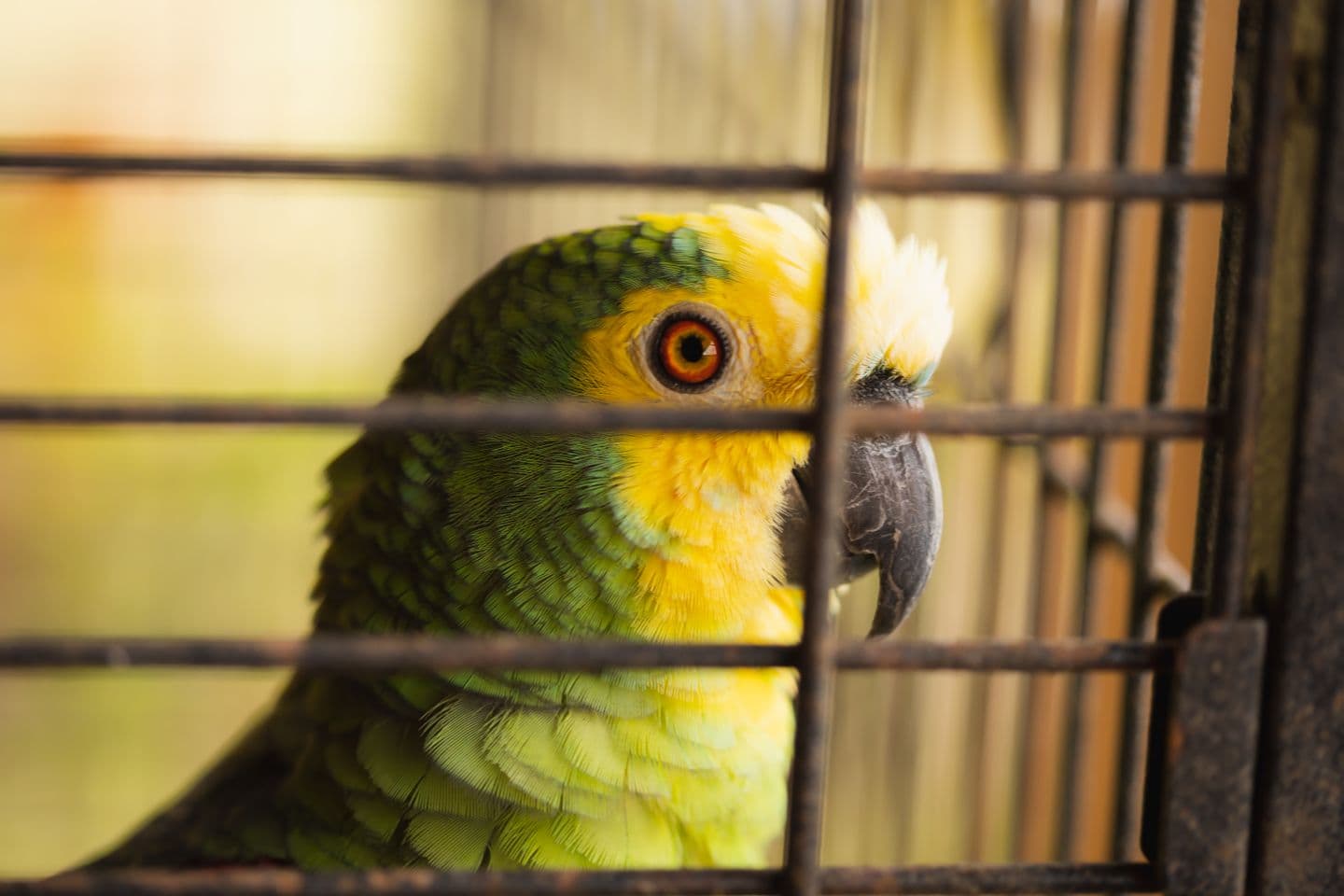
Parrots do not have hands. Their beak works as a third limb, used for climbing, balancing, exploring textures and communicating with flock mates, which in a home setting means you. Beaking is a bird gently placing its beak on your finger, hand or ear, applying light pressure while it investigates or grooms. A true bite is fast, hard and usually accompanied by ruffled feathers, a flared tail or pinned eyes, a clear warning that the bird wants space right now.
Confusing the two is one of the most common reasons well meaning owners accidentally teach a bird to bite harder. Punishing gentle beaking as though it were aggression can make a young or nervous bird more defensive, not less.
If beaking becomes a touch too firm, say a calm, low pitched no biting and gently move your hand away. Birds tend to read a high pitched reaction as exciting rather than corrective, so squealing or yanking your hand back can accidentally reward the behaviour by turning it into a game.
If your bird gives a genuine bite, stay calm, avoid shouting or flinching dramatically, and simply set the bird down on a perch or its cage and step back to give it space. Never hit, flick or shake a bird for biting. This damages trust and almost always makes biting worse over time.
Learning to spot these cues gives you a chance to back off before a nip happens at all, which is far more useful than reacting after the fact.
In households where children handle the family bird, it is worth walking them through beaking versus biting directly, since a child who yanks a hand away and squeals at gentle beaking can accidentally teach the bird that this gets a big, exciting reaction. A simple rule works well: a soft mouth on a finger is fine to sit through calmly, but if it ever hurts, the child should say the family's chosen no biting phrase in a low voice and calmly move away, exactly as an adult would.
Article content © S Vejay Anand. All rights reserved.
Birds / Getting Started
It is possible in many Indian households, but it takes real management, not just hoping for the best.
3 min read
Birds / Health
From paratyphoid to a lung condition now worrying doctors in Mumbai and Delhi, here is what every pigeon keeper and balcony feeder in India should know.
4 min read
Birds / Getting Started
Almost every Indian home has a money plant trailing along a shelf or a tulsi pot on the balcony. Most owners never think twice about it until their bird takes an interested peck, so it is worth knowin
3 min read