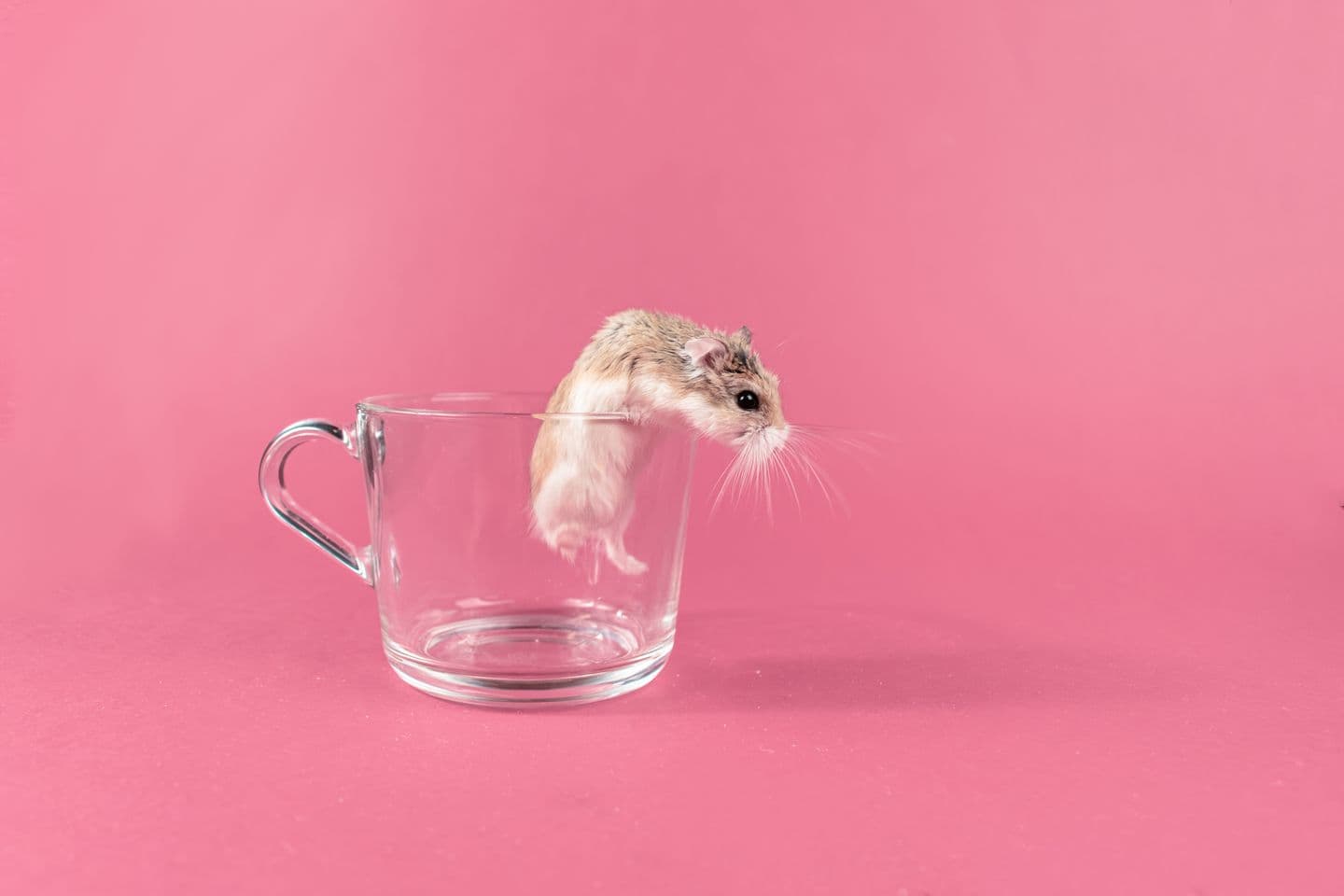
Around 10 to 12 centimetres, with a brown coat and a dark stripe down the back, and notably, a longer tail than other pet hamster species, giving it a slightly mouse-like appearance.
A rarer breed in India, distinctive for its longer, mouse-like tail.
Appearance and size
Around 10 to 12 centimetres, with a brown coat and a dark stripe down the back, and notably, a longer tail than other pet hamster species, giving it a slightly mouse-like appearance.
Temperament
Generally calm once tamed, though can be initially shy. Despite sometimes being grouped with dwarf hamsters, Chinese hamsters are their own distinct species and, like Syrians, are best kept solitary as adults.
Housing
A secure cage or tank with narrow bar spacing, since they are agile climbers and can squeeze through small gaps. They also appreciate vertical space and climbing branches more than some other hamster species.
Diet and special notes
A standard hamster mix with vegetables works well. Like the dwarf breeds, portion control matters, and treats should be occasional rather than routine.
Lifespan
Around two to three years, on the longer end for a small hamster.
India-specific tip
This is the rarest of the five species in the Indian pet trade, and finding a reputable, specialised breeder may take some research. Confirm the seller's credibility carefully before committing, given how uncommon the species still is here.
A note on legal and import considerations
Since Chinese hamsters are uncommon in India, some sellers may be importing or sourcing them through less transparent channels. It is worth asking directly about the animal's origin and any relevant documentation, both for the hamster's welfare history and your own peace of mind as a buyer.
Distinguishing males from females
The longer tail that defines this species can make quick visual sexing slightly trickier than with other breeds for a new owner, so if you plan on keeping more than one Chinese hamster, even in separate enclosures placed near each other, have the sex confirmed by an experienced breeder or vet rather than guessing.
Taming a hamster is less about training tricks and more about building enough trust that it feels safe around you. Done patiently, most hamsters become comfortable being handled within a few weeks.
A hamster's diet in the wild is remarkably varied, seeds, grains, the occasional insect, and vegetation. In captivity, a good commercial mix does most of the work, but understanding what it should con
Hamsters look like the easiest pet in the world. Small cage, small body, small appetite. That reputation is only half true. They are low maintenance compared to a dog or cat, but they are not a toy, a